
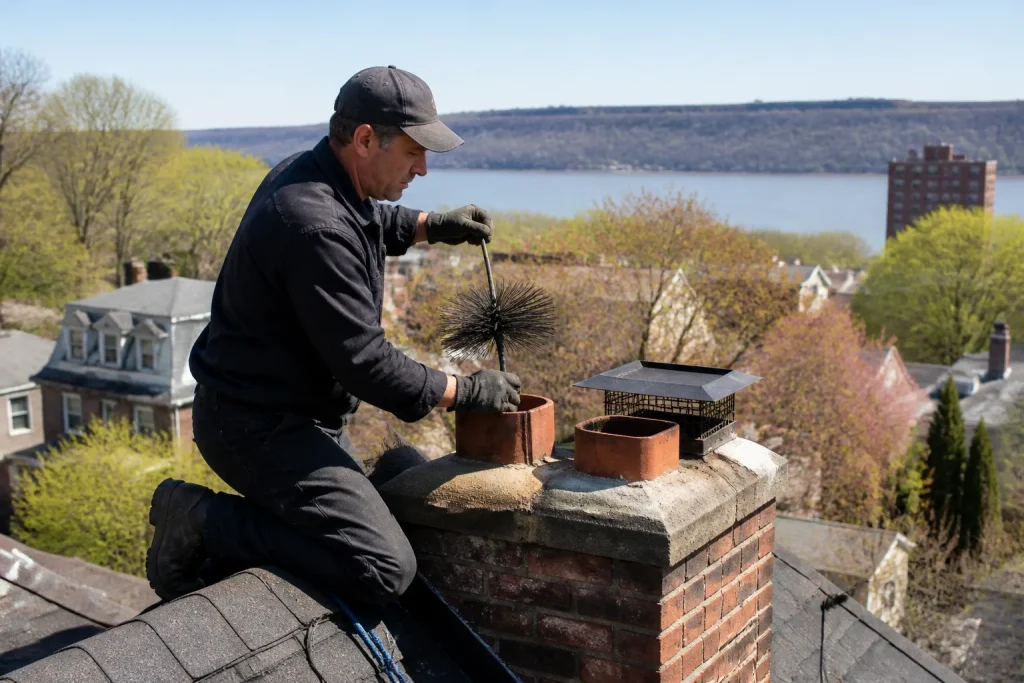
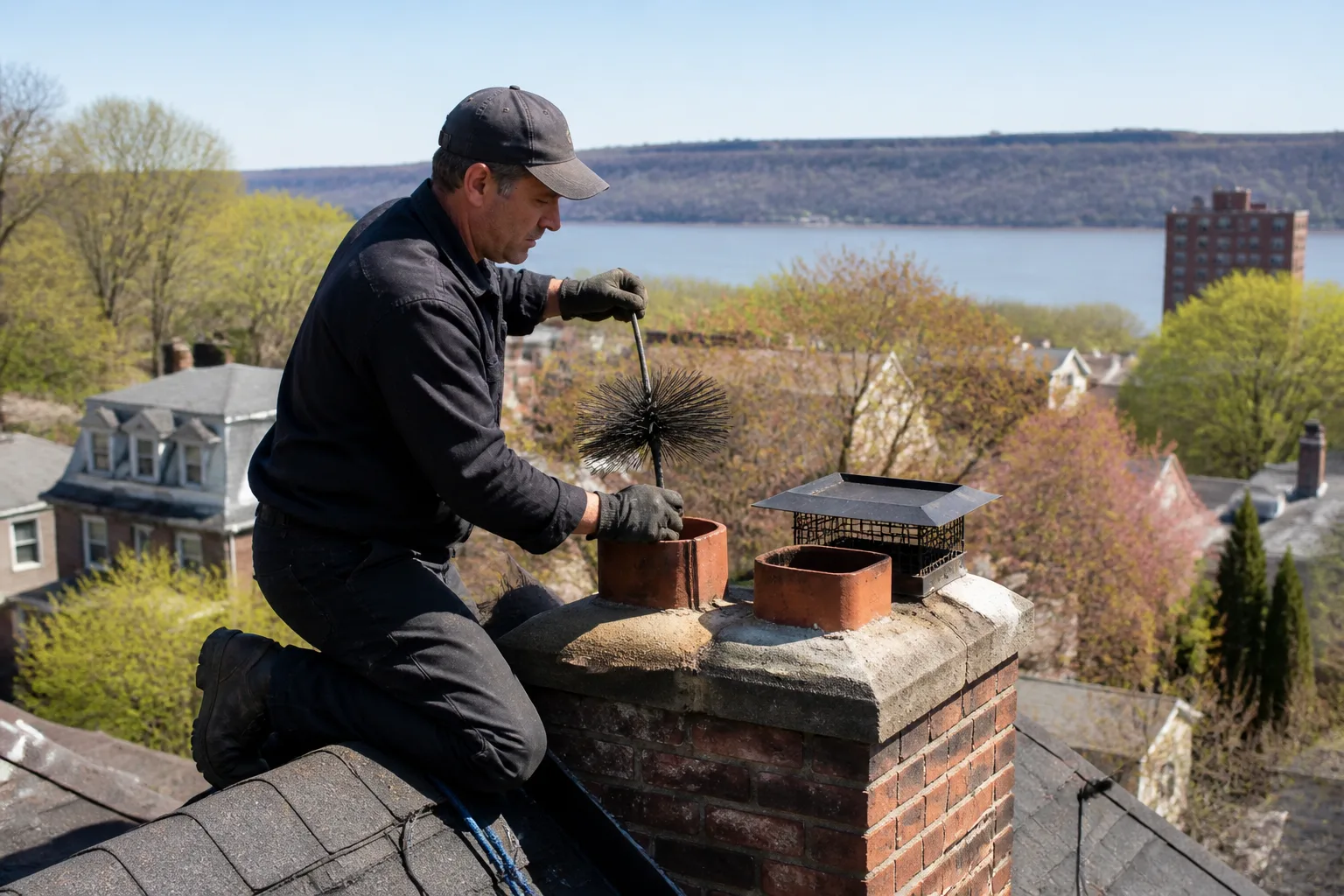
Top Signs You Need Chimney Cleaning Service – Don’t Ignore These
Most chimney problems don’t announce themselves with smoke rolling into the living room. They show up quietly: a faint campfire smell in the house on a warm spring day with no fire burning, a dusting of black soot on the firebox floor between uses, a fire that has started taking longer to catch than it used to. Each of those is creosote, moisture, or blockage giving you advance notice. The signs below tell you which problem you’re actually looking at, so you can stop guessing and get it cleaned before it becomes a repair.
If reading this makes you suspect your own chimney is overdue, call us at (888) 848-6804. We’ll inspect first and recommend only what the chimney actually needs.
Why Does My House Smell Like a Campfire With No Fire Burning?
A campfire smell in a room with no fire lit means creosote deposits inside the flue are off-gassing, and it usually means a cleaning is overdue. Creosote is the residue left behind by wood smoke, and as it builds up in stages it becomes softer, then stickier, then harder and more flammable. That smell is the middle stages announcing themselves.
Your nose can actually grade the urgency. Here’s what each smell tends to signal in Riverdale homes:
- Faint campfire or wood-smoke odor on a warm day: stage-two creosote is off-gassing in the flue. It’s the earliest reliable signal, and on its own it points toward booking a cleaning, not panicking.
- Strong, sharp, almost vinegar-like smell: the deposits have become more concentrated. This is a step past the soft stage and worth treating as a prompt cleaning.
- Acrid, burning-plastic or tar smell: this points to a late creosote stage that has glazed onto the flue walls. Glazed creosote is the dangerous kind, and a standard brush may not remove it. This is when the call goes from “when you have a chance” to “this week,” and when the flue needs to be checked before the next fire.
- Damp, musty, basement-like odor: that’s moisture, not smoke. Something is letting water into the system, and it usually ties back to the cap and crown work, which we’ll get to below.
We specify professional-grade materials like Olympia Chimney and DuraFlex when the flue condition calls for repair after a cleaning, but the first move is always to look, not to sell.
What Does White Staining on the Outside of My Chimney Mean?
White, chalky staining on exterior brick or mortar is called efflorescence, and it means water is moving through the masonry. It is not cosmetic. When moisture soaks into brick and mortar and then evaporates back out, it carries dissolved salts to the surface and leaves that white crust behind. The stain is the visible part. The problem is the path the water took to get there.
In Riverdale, that pattern often starts above eye level: a cracked or missing chimney crown, a cap that’s rusted through or been knocked loose, or failed flashing where the chimney meets the roofline. The white staining is the clue, not the cause. If you’re seeing it, the sequence is to find where the water is getting in and shut that door, because moisture and creosote together create a corroded flue and a masonry that crumbles from the inside out.
This is where cap and crown work earns its keep. A properly fitted cap keeps rain, birds and squirrels out of the flue between fires, and a sound crown sheds water off the top of the chimney instead of letting it settle into the masonry. Teams that only carry brushes usually don’t do this work at all. We do, using Famco and Gelco components, because a chimney that’s clean but leaking isn’t done.
If the white staining is spreading, that’s your cue to have the whole system looked at rather than just the firebox. Related services in Riverdale: chimney cap & crown.
Why Is Soot Falling Into My Firebox Between Fires?
Soot landing on the firebox floor when nothing is burning points to buildup on the smoke shelf or around the damper plate, and it often means the flue is partially obstructed. There’s no fire, no draft to move the debris, so it sifts down under its own weight. If you open the fireplace doors after a quiet week and find a fresh layer of soot, the chimney is telling you it can’t clear itself.
The smoke shelf is the ledge just behind the damper. It catches whatever comes down the flue, and over time it loads up with a mix of soot, creosote flakes and sometimes bits of cap debris or nesting material. Once it’s full, it starts shedding. A brush run through the flue is the direct fix, but the important part is finding out what filled it, because debris falling from above usually means the cap is missing or damaged.
Here’s the order we work in: sweep the flue, clean the shelf and damper, then check the cap and crown. If we find a cap that’s failed, or a crown that’s cracked, we can quote the fix on the same visit rather than sending you to find a second contractor. From the firebox to the cap, one property, one visit.
Why Is My Fire So Hard to Start?
A fire that used to catch quickly and now smolders, smokes, or needs constant coaxing is usually struggling against a partial blockage. Draft is the chimney’s ability to pull smoke up and out, and anything narrowing the flue cuts that pull. The three common culprits each carry a different level of urgency:
- Creosote buildup: the most common cause. A flue that’s coated thick enough starts to restrict airflow, and the fire gets sluggish before it gets smoky. This is a cleaning issue, not a repair issue.
- Animal nesting: birds and squirrels love an open, uncapped flue. A nest near the top narrows the passage and can drop material into the firebox. It’s usually a cleaning plus a cap, and the cap is the part that stops it happening again.
- Cap or crown debris: a rusted-out cap can shed metal or let in twigs and grit that settle in the flue. This one straddles cleaning and cap repair.
One you’ll hear from us often: a fire that smokes into the room instead of up the flue is a stop sign, not a nuisance. Don’t keep feeding it hoping the draft catches. That’s the point to shut it down and get the chimney looked at.
Is the Annual Cleaning Rule Enough?
No. The once-a-year cleaning calendar is a fallback, not a guarantee. The real trigger for cleaning is the condition of the system, and how fast a flue loads up depends on what you burn, how often, and how the chimney drafts. A homeowner who runs the fireplace hard in the cold months can be overdue well before a year passes, while someone who lights a fire a handful of times a season might stretch further.
Riverdale’s shoulder seasons are where this matters. Spring and early fall are the times when a fireplace sits idle for weeks, and that’s exactly when the off-gassing smell shows up and when a slow-starting fire is easiest to notice. The calendar won’t flag it. Your nose and your fire will. Watch for the combination:
- The campfire or acrid smell when no fire is burning
- Fresh soot in the firebox after a quiet stretch
- Fires that take noticeably longer to catch than last season
- White staining spreading on the exterior
Two or more of those at once is a clear “book it” signal, whatever month it is.
When Should You Call a Chimney Professional?
Call a trained professional when you notice a glazed, tar-like smell, when smoke comes into the room, when you see cracked masonry or white staining that’s spreading, or when soot is building up in the firebox faster than you can explain. Creosote removal, flue inspection and any repair to the liner or masonry are jobs for someone who can see the full length of the flue, and a chimney fire or carbon monoxide problem is not something to diagnose by flashlight from the hearth. A trained eye with the right tools is the difference between a cleaning and a repair you didn’t need.
It’s also fine to book an inspection with no cleaning attached. If you’re buying or selling a home, or you just haven’t had the system checked, you shouldn’t be forced into a sweep you may not need. We offer inspection as a standalone service for exactly that reason. Related service: chimney sweep.
The Bottom Line
The signs that matter most are quiet: a smell with no fire, soot between uses, a fire that starts slow, white staining on the outside. Treat each one as a specific mechanical problem rather than background noise, and you’ll clean on condition instead of guessing on the calendar. Our technicians have up to 13 years of experience reading these signals, and we inspect first, then recommend, so nothing gets sold that the chimney doesn’t need.
If you’re in Riverdale and need help, Chimney Sweep Riverdale offers free estimates. Call (888) 848-6804. We answer 24/7. Fast dispatch from 7am to 7pm, Sunday through Friday. When you call, we’ll book an inspection and a cleaning together if the flue calls for it, and we can handle repairs on the same visit. You can also start from our main page at Chimney Sweep Riverdale, or read up on chimney repair if you’ve already spotted damage.
Frequently Asked Questions
Most wood-burning chimneys should be cleaned once a year or whenever the flue has built up a noticeable layer of creosote, whichever comes first. The annual rule is a fallback. If you’re seeing soot in the firebox or smelling smoke with no fire, you’re due now, not next fall. Call (888) 848-6804 for a free estimate.
Creosote keeps building in stages, and the later stages glaze onto the flue walls and become harder to remove and more flammable. A blocked or heavily coated flue also drafts poorly, which means smoke in the room and, over time, moisture damage that turns a cleaning into a repair. It’s cheaper to clean on schedule than to repair after the fact. Call (888) 848-6804 to book a sweep.
On its own, the faint campfire smell is an early signal that creosote is off-gassing and a cleaning is overdue, not an emergency. An acrid, tar or burning-plastic smell is more urgent, because it points to glazed creosote. Either way, it’s a reason to get the flue inspected before the next fire. Call (888) 848-6804 for an exact quote; estimates are free.
Basic surface cleaning of the firebox is fine, but the full flue, smoke shelf and damper are where the real buildup sits, and creosote removal and any liner work are jobs for a trained technician with the right tools and a clear view of the whole system. If you’d rather not DIY, call (888) 848-6804. We inspect first, then recommend.
Written by the team at Chimney Sweep Riverdale.
Need Chimney Cleaning Help?
Call Chimney Sweep Riverdale - the local pro we connect you with is licensed and insured, here with fast help in Riverdale.
(888) 848-6804