
Emergency Chimney Sweep Near Me: What Riverdale Homeowners Should Do First
Close the damper. That’s the single most effective thing you can do when smoke starts rolling into a Riverdale living room, and it’s the step most people skip while they’re scrolling for a phone number. A closed damper cuts the draft feeding a flue fire and slows smoke pushing past the throat of the fireplace. Before anything else, close it, get people and pets clear, and check your carbon monoxide detector. Then work through the rest of this list.
If you’d rather not think it through alone, call (888) 848-6804. We answer 24/7, and fast dispatch from 7am to 7pm means a technician can be on the way while you’re still deciding what to do.
What should you do first in a chimney emergency?
Close the damper, confirm your CO detector is working, and shut off the HVAC system if it’s pulling air through the house. Then decide whether you’re calling 911 or a sweep. The order matters: closing the damper first starves the flue of oxygen and slows smoke migration into the room, which buys you time to assess the situation calmly rather than reacting to it.
Work through this checklist in sequence:
- Close the damper. If the handle won’t move, don’t force it. Note that and tell the technician.
- Get everyone out of the immediate area. Move children and pets to another room or outside, not just to the other side of the hearth.
- Check the carbon monoxide detector. If it’s sounding, leave the house and call 911 from outside. Don’t wait to see if it stops.
- Shut down the HVAC system. A running furnace or air handler can pull smoke and CO through ductwork into rooms far from the fireplace.
- Don’t burn anything else. No paper, no fire starters, no “burning it out.”
- Call. If you see flames outside the firebox, heavy smoke with no fire, or smell gas, call 911. If it’s smoke backing up, a strong creosote smell, or a visible blockage, call a sweep.
That last distinction is where most homeowners in Riverdale hesitate. We get it. A chimney making noise at 9pm is unsettling, and the instinct is to call whoever answers first. The checklist above takes about two minutes and tells you which call to make.
Is it a real emergency or just urgent?
A true chimney emergency involves active smoke intrusion, a chimney fire, or an animal trapped in the flue. An urgent-but-not-emergency situation is heavy creosote odor on a warm day, a draft that’s gotten weak, or a cap that’s come loose. The difference decides whether you need someone today or whether it can be booked into the next opening.
Here’s how we separate the two when a Riverdale homeowner calls:
- Active smoke in the room: emergency. Close the damper and call.
- Chimney fire signs: roaring sound like a freight train, popping, dense smoke from the top, discolored or cracked flue tiles visible from outside. Call 911 first, then a sweep.
- Animal in the flue: urgent. Don’t light a fire. Don’t try to smoke it out. A blocked flue with a fire lit underneath is a carbon monoxide event waiting to happen.
- Strong creosote smell on a warm day: urgent, not emergency. That odor is creosote off-gassing as temperatures rise. It’s a sign the flue needs cleaning, but it’s not a reason to panic.
- Loose or missing cap: urgent. Water and wildlife get in fast. Book a chimney cap & crown appointment.
If you’re not sure which column you’re in, describe what you’re seeing and hearing on the phone. We’d rather talk you down from a non-emergency than have you wait on a real one.
What information should you have ready when you call?
Have four things ready: what you’re seeing or smelling, whether the damper is open or closed, whether your CO detector has activated, and the last time the chimney was swept. That’s enough for dispatch to prioritize correctly and send a technician with the right equipment the first time.
Specifics that help us help you:
- The symptom in plain language. “Smoke backing into the room when I light a fire” tells us more than “the chimney isn’t working.”
- What type of appliance you have. Wood-burning fireplace, wood stove, gas insert, or gas fireplace. The inspection approach differs.
- How the flue is lined, if you know. Clay tile, stainless liner, or unknown is fine. Unknown just means we look.
- Any recent work on the chimney or roof. A new cap, a masonry repair, a roofing job nearby.
- Whether the smell or smoke started suddenly or has been building for weeks.
One more thing worth mentioning on the call: if you’re buying or selling a Riverdale property and the inspection is what’s needed rather than a cleaning, say so. Inspection is a standalone service here, and you shouldn’t be pushed into a sweep you may not need. Our technicians have up to 13 years of experience reading exactly these situations, and the answer to “do I need a sweep or an inspection” is usually clear within a couple of questions.
Why not call a handyman or HVAC tech?
Because the tools and inspection protocols are fundamentally different. A chimney technician uses a rotary sweep, a camera that travels the flue, and inspection standards written specifically for venting systems. A handyman with a brush on a pole can knock soot loose, but they can’t tell you whether the flue liner has a crack, whether the crown is shedding water into the masonry, or whether that smell is creosote or a blocked vent.
HVAC technicians are excellent at what they do, and they’re the right call for a furnace problem. But a gas fireplace venting issue or a wood-burning flue blockage sits outside their scope. In a chimney emergency, the wrong specialist adds a day and a second opinion to a situation that needed one visit.
This is also why we work from an inspect-first-then-recommend position. Nothing gets recommended without camera evidence you can see for yourself. If the flue is sound and the creosote is light, we say so and you can safely wait. If the liner needs attention, we’ll show you the footage. We specify HeatShield for in-place liner resurfacing when the flue condition supports it, and DuraFlex or Olympia Chimney systems when a full liner replacement is the honest answer. Gelco and Famco components cover the cap and crown work that keeps water out. Different problems, different materials, chosen for what the flue actually looks like.
What does a same-day emergency sweep actually involve?
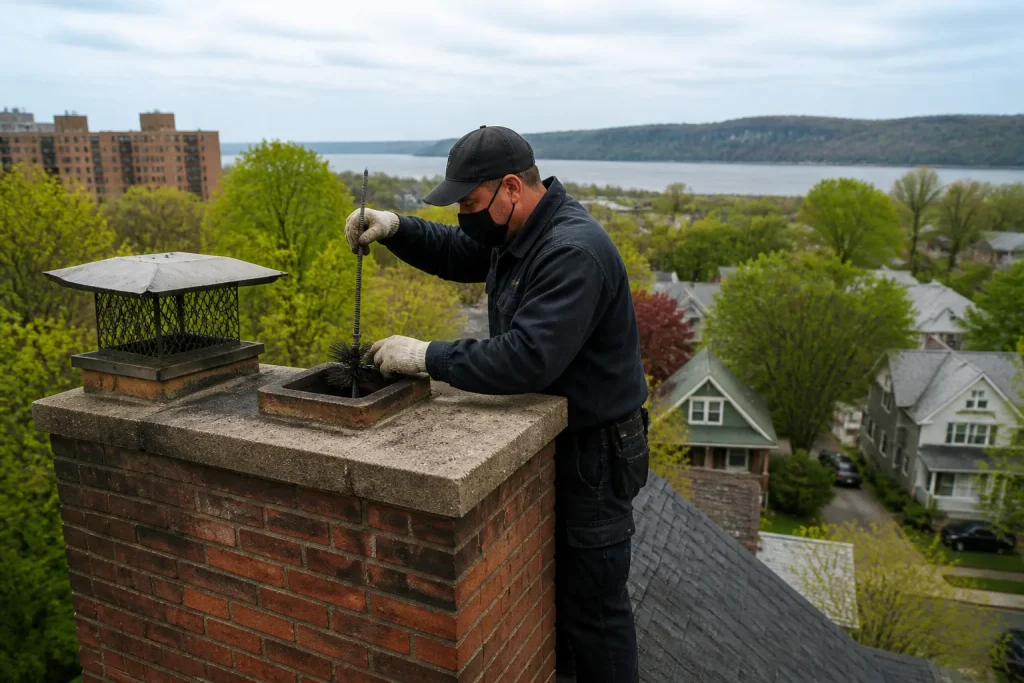
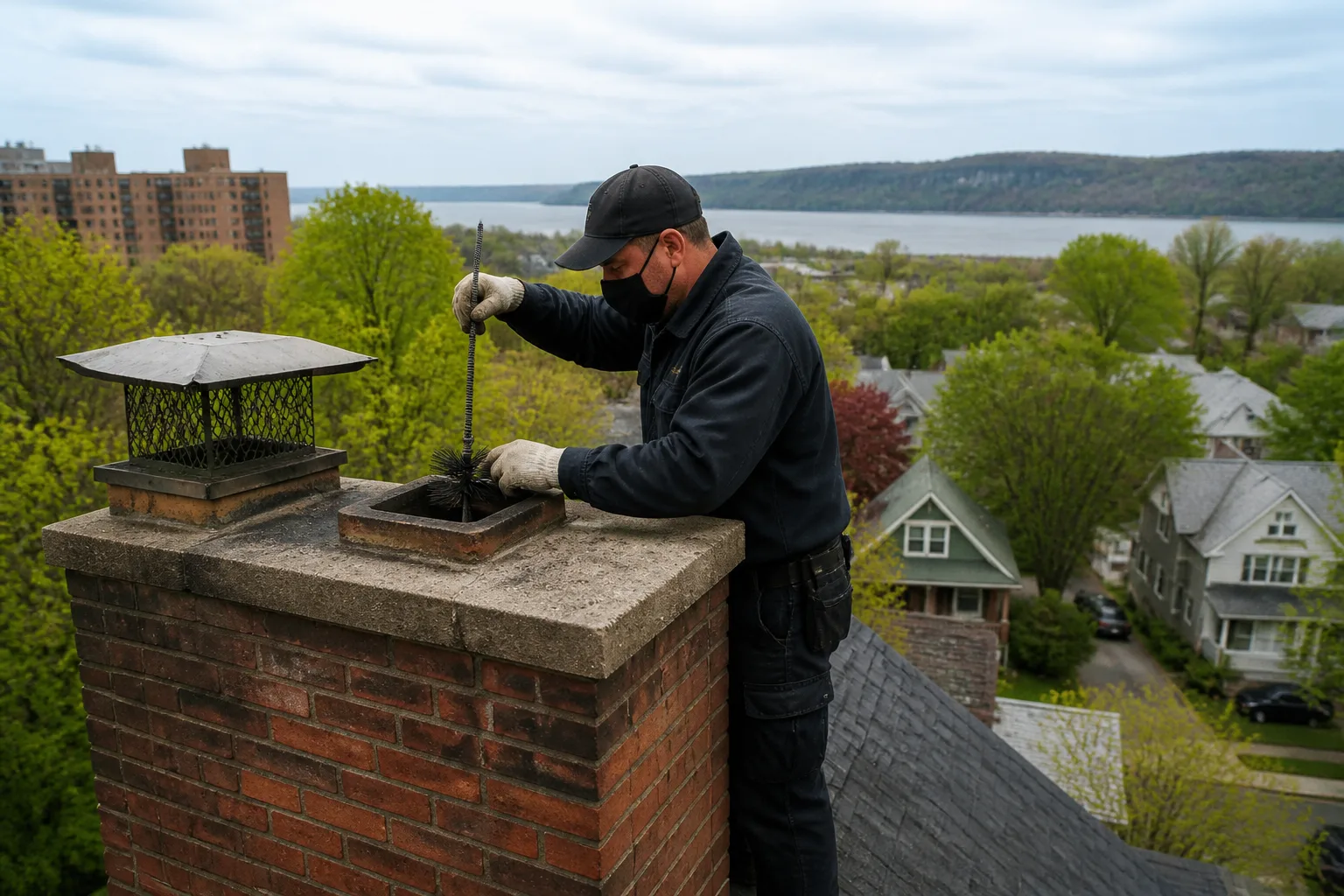
A same-day emergency sweep is more than a cleaning. It’s a diagnostic visit: the technician clears the obstruction or creosote load, then runs additional inspection steps that follow any suspected flue event. That means a camera inspection of the full flue, a check of the damper and firebox, a look at the cap and crown from the roofline, and a photo report you keep.
Here’s the rough shape of it:
- Assessment first. The technician confirms what’s happening before any equipment goes up the flue.
- Clearing the flue. Soot and creosote removal with drop cloths and containment, so your living room doesn’t become part of the job.
- Camera inspection. Every emergency visit includes one, because a fire or an animal in the flue can leave damage that a visual check from the hearth will never reveal.
- Photo report. You see what we see. If chimney repair is needed, the images are the reason, not a sales pitch.
- A written recommendation. What’s safe to use now, what needs attention soon, and what can wait until spring.
The urgency in Riverdale is seasonal, not hourly. Creosote builds through the burning season, and the right time to deal with it is before the next one. We don’t promise same-day service, but we do book emergency visits into the next available opening, Sunday through Friday, 7am to 7pm.
When to call a pro
Call a professional the moment smoke comes into the room with the damper open, your CO detector sounds near the fireplace, or you hear anything roaring or popping in the flue. Those are not situations to sleep on. A failed flue doesn’t announce itself politely, and the reasons to act are concrete: chimney fires burn inside a flue you can’t see, and carbon monoxide gives no warning before it becomes a health problem.
If your situation is a heavy creosote smell, a weak draft, or a cap that’s come loose, you can book a sweep without it being an emergency. Call (888) 848-6804. We answer 24/7, and a call outside dispatch hours is booked into the next opening, Sunday through Friday, 7am to 7pm.
Related services in Riverdale: if you’re booking a visit, a chimney sweep handles the cleaning side. We’re Chimney Sweep Riverdale, and we cover the whole system from the firebox to the cap, so a repair discovered during a sweep gets handled in the same visit rather than a referral to someone else.
The Bottom Line
In a chimney emergency, close the damper first, check the CO detector, shut off the HVAC, and then decide between 911 and a sweep. Have your symptoms, damper position, appliance type, and last sweep date ready before you call. Skip the handyman and the HVAC tech; you need chimney-specific tools and inspection standards. And remember that most of what feels like an emergency is urgent-but-manageable, and the good news is you’ll know which one it is within about two minutes.
If you’re in Riverdale and need help, Chimney Sweep Riverdale offers free estimates. Call (888) 848-6804. Estimates are free, the price is set per job by the written estimate, and nothing gets recommended without camera evidence you can look at yourself.
Frequently Asked Questions
Close the fireplace damper immediately. That’s the fastest way to cut the draft feeding the smoke and the first step before anything else. Then check your carbon monoxide detector, shut off your HVAC system, and move people and pets clear of the room. From there, decide whether to call 911 or a sweep based on whether you see flame outside the firebox or your CO detector is sounding.
No, but you do need to book one. A strong creosote smell on a warm day is creosote off-gassing as temperatures rise, which means there’s a heavy deposit in the flue. It’s urgent, not an emergency. Don’t light a fire until the chimney has been cleaned and inspected, and get on the schedule before the next burning season. Call (888) 848-6804 to book an opening, Sunday through Friday, 7am to 7pm.
It’s urgent, not an emergency. A missing cap lets rain, birds, and squirrels straight into the flue, and water is the most common cause of chimney damage we see. Don’t burn until it’s back on, and book a cap appointment rather than a sweep. Gelco and Famco components are what we use for this work at Chimney Sweep Riverdale, which many sweep-only crews don’t handle at all. Call (888) 848-6804 for a free estimate.
Once a year for most wood-burning fireplaces, and more often if you burn heavily or use unseasoned wood. Gas appliances need an annual inspection even though they don’t produce the same creosote load. The inspection is the important part: it catches liner damage, cap failures, and crown cracks before they turn into a repair. Call (888) 848-6804 for a free estimate.
Written by the team at Chimney Sweep Riverdale.
Need Chimney Cleaning Help?
Call Chimney Sweep Riverdale - the local pro we connect you with is licensed and insured, here with fast help in Riverdale.
(888) 848-6804